AFRICA (East Africa)

Photos!

Erin and George admiring the crater

Eli wearing Maasai fabrics

Lions on the safari

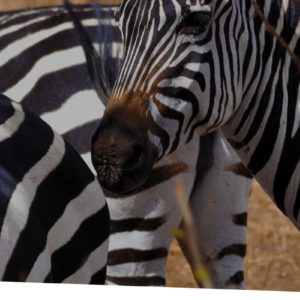
Zebra smiling for a photo

Robbie making paper beads with Innocent

Avy and a girl at SNEC posing with some sass

All smiles at SNEC

Paul

Dance circle after Sports Day at a nursery school

Infectious smiles

Family photo shoot round 2

Spamming the world

Out of Africa

3 months of intentional travel and service-learning – check!  All of our students are currently in transit, on the way to their next adventures.  As leaders, it has been an absolute honor to learn with and from this extraordinary group of individuals.  To all of you at home, thank you so much for your support — the love of friends and family is invaluable while on the road.  We also appreciate your understanding as we battled the technological limitations of East Africa – as students return to the land of high-speed internet, keep checking this blog for more pictures in the next few weeks.  And to you, Rebecca, Eli, Kyle, Erin, and George, thank you for your genuine passion, hard work, and sass.  You’ve impacted both of our lives immensely.  We hope you’ve been equally inspired and know that you’ll carry the momentum of this journey with you for the rest of your lives.

Oh, and never forget to choodi!

Tunashukuru (We are grateful),

Avy and Robbie


The group at the airport, feeling strong at the end of a fantastic semester.


We did it!!

Scuba!

Here are a couple of shots from our Scuba course off of the beautiful island of Zanzibar in the Indian Ocean – a fantastic way to end the semester!


George was dearly missed, but there in spirit in the form of his GoPro underwater camera!


On the way to becoming certified divers!

Free Travel!

Every semester towards the end of the trip all the Carpe students have 4 to 5 days of free travel that they themselves plan every aspect of, from accommodation to transportation to the activities. This semester we wanted to step outside the norm and were feeling very inspired by service so we decided to search for a service project that we could embark on instead of seeing a tourist attraction. After searching without any luck the Carpe Diem office emailed us and said that they had an idea for a project. This project ended up being the opportunity to volunteer on a rhino sanctuary in central Uganda. We were so excited at the possibility that we agreed right away, yet we had no idea what to expect. 

When we arrived at the Ziwa Rhino Sanctuary we were told that we would be working directly with the rhinos. The first day we arrived the rangers took us out into the bush and we had our first glimpses at 3 of the 12 rhinos at the park. We were able to get really close to them with still keeping our distance. At the sanctuary there are 3 male adult rhinos, 3 adult female rhinos, 3 baby boy rhinos, and 3 baby girl rhinos with the youngest baby being only 6 months old. The massive beasts had such a grace and calmness to them which we didn’t expect. The second day the group split into 2 for a 10 hour monitoring session. Each group was headed by a ranger who took us out into the bush as we tracked, monitored, and data collected all day. We experienced a normal day for a ranger and watched the rhinos every move. Our second day at the sanctuary we were assigned foot patrol. The sanctuary is surrounded by an electric fence which keeps the rhinos in and the poachers out. Because poachers attempt to break the fence we had to walk around the permiter and report any broken pieces or attempted entries. We don’t actually know how far we walked but patrolling the fence is not an easy job. That afternoon the head ranger took us to the cattle gate where we could see the cattle program the sanctuary set up. When the sanctuary opened and obtained the land people’s cattle grazed on the land. Instead of kicking all those people off the sanctuary allows the cattle and cattle keeper to enter and graze under certain rules. This is beneficial for the rhinos because they only eat short grasses and the cattle eat the taller grasses and make them shorter. Our final day started early with a bird walk where we went onto the land and listened and looked for all the species of birds we could find. 

Overall it was an amazing program and we are so lucky to have spent a few days there and we left wanting more time to learn about the other programs the sanctuary has started. We are very happy that we chose to step outside the box and do another volunteer project after just having done 2 1/2 months of volunteering. How many people can say they’re worked on a rhino sanctuary and have gotten within 20 feet of them? The 7 of us can now check that off our life dreams list. 

Kampala!

Talk about a crazy city! We spent our fist night in Kampala celebrating Kyles birthday at Club Monalisa dancing and getting laughed at by the locals. The next day we were sent though the city on an scavenger hunt. We explored HUGE markets that seemed like they would never end, finding some amazing sweater vests and hip shoes and all sorts of good stuff. Our last day was spent at the Ugandan National Museum where we learned about this wonderful countries rich history. Kampala is a crazy city filled with great people, food and and some interesting history!

Lake Bunyonyi

Over the past few weeks, I have been consistantly reminded of how fortunate we are to be doing such incredible acts of service in such breath-taking locations. Lake Bunyonyi is no exception. Honestly, I wish I could accurately describe how beautiful this place is but my words would/cannot do it justice.

Tucked away in the scaling hills of the isles are quaint villages, full of character and liveliness. The primary schools are full to capacity with hundreds of children running around in their vibrant, but matching, uniforms. We were given the opportunity to help organize and assist in 2 nursery school field activity days. What a sight. Just imagine a hundred tiny children, all in uniform, trying to hop together in a flour sack bigger than themselves in a relay race. Or two three year olds desperately holding each other up as they waddle, clumsily, across a finish line in a three legged race. Better yet, imagine the looks on their faces as we explain to them, through interpreters, that they have to find a partner and hold them up by their ankles as they guide them across the finish a hundred some feet away. So much laughter, a few tears, but all in all—worth it.

Another day we spent manipulating banana fibers into various braids and knots, taught to us by a local women’s group. The group weaves intricate designs from the bark of a banana tree to create stunning bracelets, belts, bags, necklaces and other pieces of jewelry. They also do tailoring work and sew together garments. After a few hours in the hot sun, many failed attempts with the jewelry making, and a frightening scale down the top of the hill, I will look at the local craft work with a whole new perspective. I commend the efforts and achievements of these women greatly as each piece of work is genuinely worth so much more than its shilling price.

-E

Smile, It’s the Nile

As usual, life has been pretty crazy for us. When I say crazy I mean crazy in the best way possible.
Our week started with spending Easter Day rafting the Nile. It was a great way to spend the day working together, paddling through class 5 rapids. Once again we were lucky enough to have our friend Drew come and enjoy the day with us. It was a full raft, with a total of 10 of us in the morning. However, after a lively rapid, the Nile emptied us all from the raft into the river. Those were some of the most confusing and thrilling seconds of the trip thus far.
From rafting we began our week volunteering with Soft Power Education. Soft Power oversees work in more than 45 schools in the area. Like Edirisa, they do work with disabled children. They have a clinic open for children to come to and receive education in the mornings. We were fortunate enough to have the chance to visit the clinic. On the day’s we went there were few children in attendance. We still were able to work with the kids that were there on their shapes, numbers and colors. We also did some physical therapy with a boy who has cerebral palsy. We also were able to work with Nursery school children and run seminars on what a disability is. We had to clarify that special needs are not cause by witchcraft, demons or evil spirits. It was cool to see how the children responded to the program and I would be interested to see how this sort of program works with children in primary school or even older. After spending a day with each of those projects we started our last painting project of the trip! We primed and painted the outside of two buildings. Though my painting T-shirt makes it clear that I am not a neat painter, I am proud of all the random splotches that cover it.
During this week we have been living with the incredible Mama Flow. She is such an amazing lady who has a smile and laugh that could make anyone feel at home. On top of that she is an amazing cook. She even has me eating vegetables, and liking it! I cannot believe I just said that.
After a few days more days with Soft Power next week, we will be off on our free travel for a few days of volunteering with the Ziwa Rhino Sanctuary!
We miss everyone back home (dogs included) and we can’t wait to fill you in on our new adventures.

~Kyle Houlihan

SNEC

After a whirlwind few days in Rwanda we all made it over the Rwanda-Uganda border and added another stamp to our passports. We spent a night in Kabale, Uganda at a wonderful guest house run by the NGO Edirisa. Edirisa strives to promote Africa through creativity, culture and practical skills. They have started amazing projects in cultural tourism, education, fair trade crafts and multimedia. After spending a night in Kabale we drove one house outside town to SNEC (Special Needs Education Center) in the village of Katanga. SNEC is a school opened only a few years ago for special needs children and provides them with education, housing, food, and support. Students have a wide range of disabilities which include physical disabilities, mental disabilities, and students who are deaf. During our time at SNEC we went to each classroom of students and made bracelets and necklaces with them out of paper beads. Each kid got to roll their own beads, glue them, string them on colored yarn, and give them a shiny coating with varnish. It was so rewarding to see students catch onto the process and take charge of making the beads all by them self with little or no help. The day after they were dry and all around school the kids were sporting the yellow, green, blue, pink and red beads. They wore them with pride and never let them out of sight. For them everything is normally communal so for each and every one of them to have something uniquely their own is special. Their faces would light up when they finished and the biggest smiles would appear. Our other big project was painting murals. Because the school has so many deaf classes and not enough classrooms they take a normal sized classroom, divide it in two, and just have the students face opposite directions while two separate teachers teach. As you can assume this gets distracting so the school came up with the idea for us to get dividers made and paint educational murals on them. We consulted the teachers on appropriate mural material, put our paint clothes on and unleashed our inner artists. In total 18 dividers were painted, totaling 36 sides each with an individual theme or scene. Mad are skills were unveiled when we painted everything from elephants to banana trees to a 9 divider long continuous morning to evening scene. Unfortunately we wont get to see them hung up but we know the kids will appreciate them. When we weren’t working we passed the time by playing with the kids and discovering each of their special and remarkable personalities. They all are so spunky and full of life that we all wanted to spend many more months with them. One of our favorite quotes of the week was “Screw Disneyland, this is the most magical place on earth. ”

–Rebecca Kuntz

UAACC

Driving through the gates, into the UAACC (United African Alliance Community Center) it quickly became apparent that we were in for an exciting few days. The outside walls were covered with beautiful graffiti created by some of the students of the community center. There were powerful messages about equality and peace. These are two things that Pete and Charlotte O’Neil bring into their everyday lives. Pete started the Kansas City chapter of The Black Panther party during the Civil Rights Movement. In his day Pete did his best to fight for equal rights for all Americans, regardless of skin color. Upon facing 15 years in prison Pete and his then 19 year old wife, Charlotte decided to leave the country, eventually landing them in Tanzania. After many years of hard work the couple was able to open the UAACC in Tanzania. Like the Black Panther Party, community service is very important to the UAACC. English classes, art classes, an orphanage and a water project are just a few of the ways the UAACC works with their community.

While we were on site we were fortunate enough to experience some of the programs first hand. We took part in both a boutiquing and jewelry making classes. When we weren’t taking part in those activities we had some relaxation time, watched several documentaries and welcomed in our temporary Carpe member Drew.

It was fantastic to learn about Mama C and Mzee Pete through their own words. They are both inspirational people and it was great to get to know them as individuals. Mzee Pete has become quite attached to the children in the orphanage. While we were there, much of his time was spent watching documentaries with children all over his living room floor. Mama C debuted her documentary for us, about her playing the obakano. She also shared some poetry and music with us.

This was yet another experience that we really cannot believe we were lucky enough to have. Speaking of luck I cannot forget to wish everyone a Happy belated St. Patrick’s Day!

Rwanda

Rwanda is a beautiful hilly green country in the middle of Eastern Africa. It is a very small country and borders Tanzania, Uganda, Burundi, and The Democratic Republic of the Congo. The capital, Kigali, is a big city with a population of around 2 million people, very clean, organized, and developed in the western sense of the word. This is where we spent our short three nights in Rwanda.

We spent most of our time visiting various Genocide Memorials in and outside of Kigali. When talking about the genocide in Rwanda it is most often referring to the brutal 100 day killing of 800,000 Tutsi but very few realize that this tragedy was years in the making.

It starting in colonial times when the Belgians who colonized Rwanda decided to separate the native people into different classes. The Belgians based these classes not only off of skin color and nose width but also the number of cattle a person or family owned. At the end of the sorting the Belgians had two main classes, the Hutu and the Tutsi. The Tutsi were the minority of richer and whiter looking people that were used as an enforcement of Belgian rule on the majority Hutu population who where richer and used for physical labor.

The first massacre of Tutsi happened in 1959 when after years of mental and physical abuse at the hands of the Hutu the Belgian rulers flipped the control of power because the Tutsi were organizing for Rwandan independence. Rwanda gained its independence and there were many massacres of Tutsi in the years following because the Hutu remained in power.

Many Tutsi fled Rwanda to neighboring countries but in 1994 the Hutu government tried to execute their “final solution” to kill every Tutsi man woman and child. With the help of French training, guns, and a mass order of machetes they were able to amount a killing rate five times faster then the Nazis managed in the concentration camp. Finally the Tutsi army led by now president of Rwanda Paul Kagame invaded Rwanda and stopped the killing. The world stood by and watched as this tragedy that is still effecting eastern Africa took place and did nothing.

We visited 4 different memorials at churches and schools where Tutsi ran to hide. It was unbearable to see the clothes of tens of thousands of people mainly women and children piled up, or the crushed skulls where they had been beaten to death with a club or machete. Blood stains on the walls from infants and toddlers being thrown into them and sticks and spears used to rape and kill women. It is really and experience that one has to have and that can not be told through words.

Having seen all of this I was amazed at where Rwanda is now. I can not blame any of the Rwandan people for what happened and I do not think they blame each other. Most of the killers confessed to what they did and have been punished and in a lot of cases forgiven. It was amazing to hear a person say if the man who killed my family and wife came up and told me that is what he had done I would forgive him. It is how the Hutu people had been raised in Rwanda for years so that is all they knew and some even said it didn’t feel like they were doing anything wrong during the genocide because that is what everyone was doing.

If you were told to go kill someone who you were raised being told was a terrorist and deserved to die would you?

Elijah Slattery-Heidrick