

Semester in India & Nepal
Birthplace of myriad forms of religion and spirituality, India and Nepal are a convergence of ancient traditions and the embodiment of paradox. From the majestic Himalyas to the bustling and vibrant “silicon” cities and coastal towns that have welcomed travelers for millennium, you will experience a region in transition, grappling with the questions of how to hold on to traditions, respect diversity and democracy, and meet the needs of a changing climate and society.
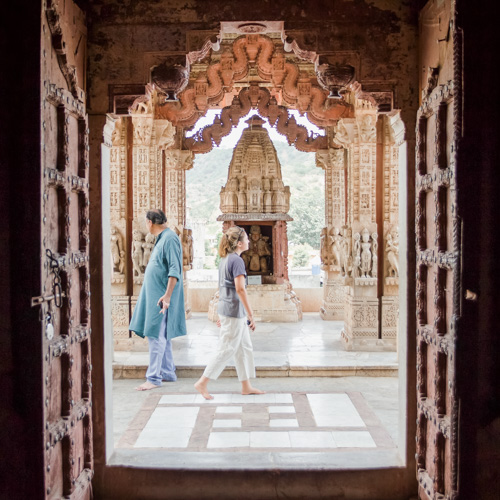
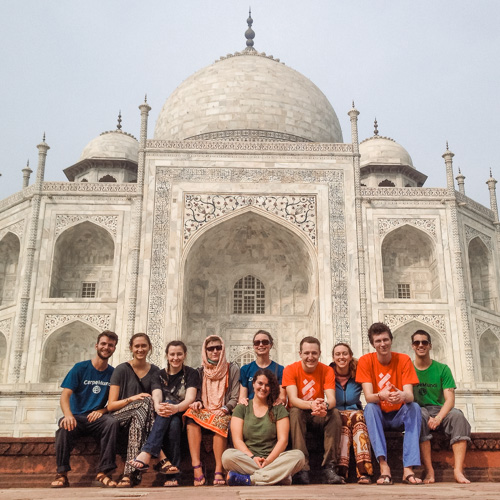
Carpe Diem Education offers an experience that brings you face to face with complex social structures, a diversity of religions and geographic regions and the intersections where tradition and change collide. You will get the chance to engage with organizations working on regenerative solutions to climate change, connect to life in local communities through homestays, experience the spirituality of an Ashram, trek in the Himalayas, kayak through the backwaters, and sample the amazing regional cuisines as your share meals with our amazing partners and soon to be new friends. Throughout your journey the people you meet and the places you stay will teach you about the complexities of the region, widen your perspective, and help you make insights to understand the interconnectedness of the world. As you come to understand how one action impacts another, and what happens in the mighty Himalayas affects the coastal communities downstream, you can start to explore your purpose and the role you want to play in a globally interconnected world.
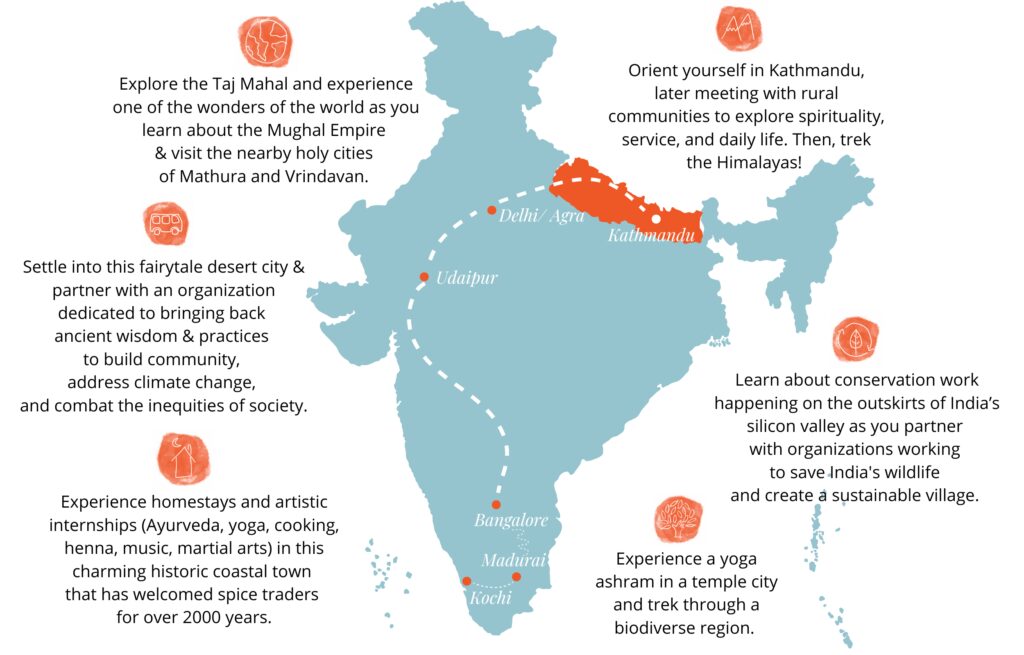
Where We Travel
Program Details

Length
70 days
Program Dates*
Spring 2025
February 19 - May 1
Fall 2024
September 18 - November 26
* Dates may fluctuate depending on flight times and availability.
Group Size
2 Overseas Educators and up to 13 students
Eligibility
Our typical student is between 17-22, though we sometimes work with students slightly outside that range depending on circumstances.
College Credit & Scholarships
Learn more about: College Credit & Scholarships
Language Requirements
None
Cost
Fall 2024: $14,900
Spring 2025: $14,900
Program tuition includes all food, accommodations, scheduled program activities, and international travel insurance for the duration of the program. International airfare and spending money are extra. International airfare estimated at $1800 - 2200; internal India flight estimated $200 - $300; visa fees estimated at $150.
Climate Nutritional Facts
Being aware of our footprint is a great first step. Learning what to do about it, is ahead. To start mitigating the extra carbon of your trip, students are encouraged to consider eating a low-meat diet, purchasing locally-made green products, using public transit where available, and talking to their local community and politicians about climate change.
During this program students will "inset" much of their carbon through volunteer projects. Students will eat and drink from typically immediately local sources, staying in housing that supports local entrepreneurs and communities, and learning about ways to better the environment that can be taken home.

About Our India & Nepal Semester
Perhaps more than any other place on earth, India and Nepal harnesses a depth of history and culture that is undeniably vibrant and alive, yet irrevocably changing and evolving in response to today’s fast-paced world.
Given the region's massive population and increasing demand for resources, it is especially vulnerable to the effects of climate change. We’ll engage with communities that are proactively adapting to the challenges that climate change is presenting. Interwoven into each experience is the ever-present role of spirituality, and the myriad ways this is infused into the lives of the people you meet.
Throughout our journey, we’ll explore concepts of wealth and poverty, and the impacts of social systems that result in oppression for some, and opportunity for others.
Questions We'll Explore:
- How do we reconcile the vast disconnect between privilege and poverty that we see nearly every day?
- What role does religion and spirituality play in the lives of the people we meet?
- How are communities in the region addressing increased demands on resources? What strategies are being implemented to address water shortages, shifting weather patterns, desertification of agricultural lands, and loss of endemic forests?
- What are the conflicts between an evolving technological and industrial movement, and the ancient traditions of artisans and craftspeople, religious sects, and social structures?
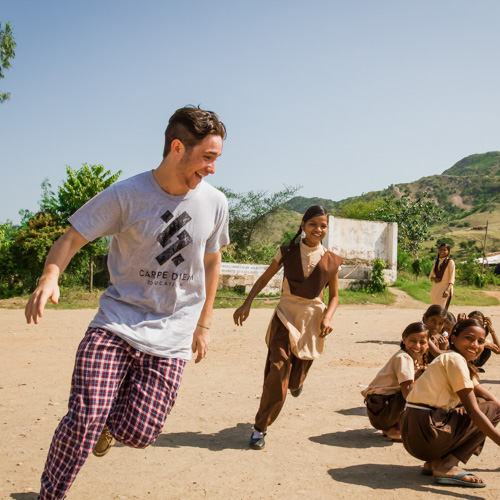
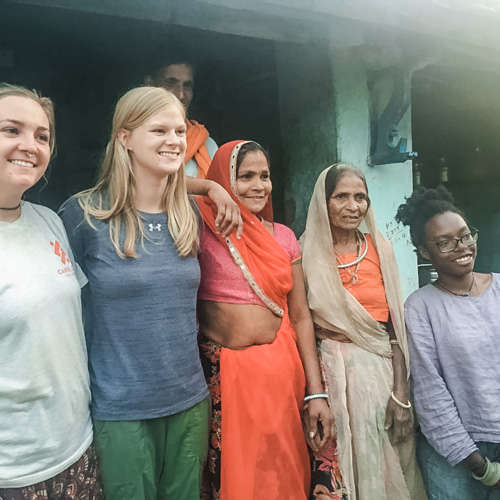
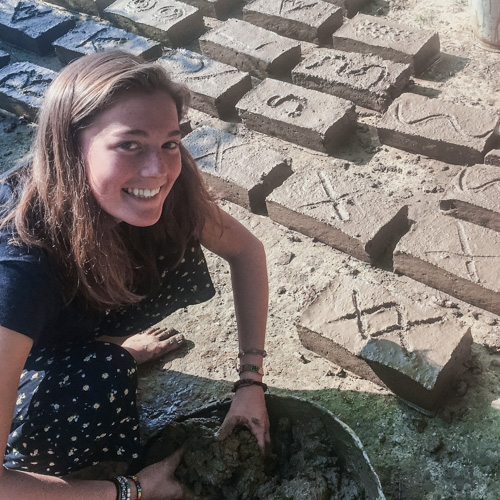
Engage in conservation with local organizations. Work with an an NGO working to protect India’s wildlife, take part in earthquake rebuilding work in Nepal, and learn how simple technological innovations coupled with ancient sustainable practices can help restore the water table in a drought stricken region of India. Discover how people are adapting to unique local conditions, creating a more sustainable model of living in community and relating to the environment, and how these efforts support local economies.
Engage in hands-on work through artistic internships with local artisans, where you’ll explore skills and crafts that have been practiced for centuries, yet are being lost in the age of technology.
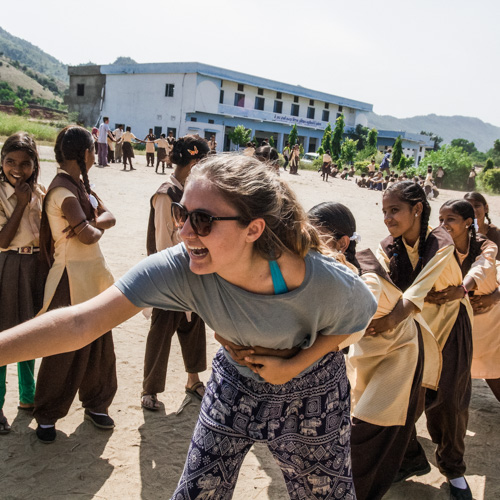
While living with homestay families in both rural and urban settings, we’ll witness the contrast that arises in economic disparity, and the results of having different levels of access to education, resources, and technology. You’ll discover spiritual concepts and practices that focus less on changing the external and emphasize cultivating happiness within.
Discover the rich tapestry of religious traditions, practices and beliefs that emerged in these lands as you learn about Hinduism, Buddhism, Sikhism and Jainism and explore the impact that traditions from outside like Islam, Christianity and Judaism have also had in shaping the cutlure and diverse current context.
And so much more!
Carpe Diem Education’s India and Nepal semester provides a window of access into diverse forms of spirituality, the complexities of addressing climate change, and a deeper understanding of regions' complex social structures.
Testimonials
"This is a program that will stretch you to the limits of what you thought was possible and leave you feeling confident."
-Daphne,
CDE Student

"What I love about our India and Nepal program is the nuance. No where else will you experience such diversity and contrast."
- Rebecca,
Program Director
"If you're looking for a sign to tell you to take a gap year then these words are for you: do it."
-Colleen,
CDE Student